|
|
|
|
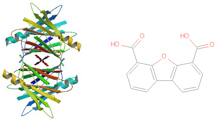
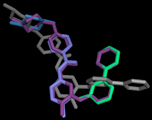
My research focuses on the study of proteins and the molecules they interact with. Our goal is to develop efficient and correct algorithms capable of providing biologists and chemists informational leverage in solving their problems. In most cases, we deal with noisy experimental data sources and are forced to reason under uncertainty. As a result, our algorithms tend to draw from machine learning, machine vision, and combinatorial optimization. Research themes include: Protein Structure Determination (x-ray crystallography, cryo electron microscopy), Modification of Protein Structure and Function (modeling of protein mutations), Structure Analysis (structure-based drug design), Ligand Structure (retrosynthetic chemical synthesis planning), and the Relationship between Nucleotide Sequence and Protein Structure. Our research is performed in close collaboration with biologists and chemists.
|
|
|
|
|
|
|
|
|
| |
On Leave at Cadre Research Labs,
I am currently working at Cadre Research Labs, a contract research group specializing in the development of custom scientific computing solutions for the biotech, pharmaceutical, and related industries. Cadre is a team of Computational and Life Science PhDs who possess expertise in developing algorithms for interdisciplinary problems. Read more |
|
|
|
|
|
|
|
|
|
| |
Lab Receives CFI Award,
UofT CFI Award Announcement
''The marvellous support of CFI fuels our research community,'' said Professor Paul Young, vice-president (research) at U of T. ''This investment will help our faculty generate a wealth of new discoveries that improve our health, extend our lives, raise our standard of living, and ...'' Read more
Journal of Serendipitous and Unexpected Results,
New Journal Launched
''The Journal of Serendipitous and Unexpected Results (JSUR) is an open-access forum for researchers seeking to further scientific discovery by sharing surprising or unexpected results. These results should provide guidance toward the verification (or negation) of extant hypotheses. JSUR has two branches, one focusing on computational sciences and the other on the life sciences.'' Learn more.
Software that Could Win the Stanley Cup,
itWorldCanada profiles our Computational Hockey project
The University of Toronto works on a project that makes use of machine vision to analyze the plays of major hockey teams and potentially improve their performance. Will it help? NHL veteran Steve Thomas makes the call...
Six Canadian Research Teams Among Those Funded Through Gates' Grant Challenges,
The lab receives a Grand Challenges Explorations award
Six Canadian research teams are among 104 international scientists and scientific teams that will receive funding through the Bill and Melinda Gates Foundation's Grand Challenges Exploration grants... (more info here) |
|
|
|
|
|
|
|
|






 BCB410 - Applied Bioinformatics