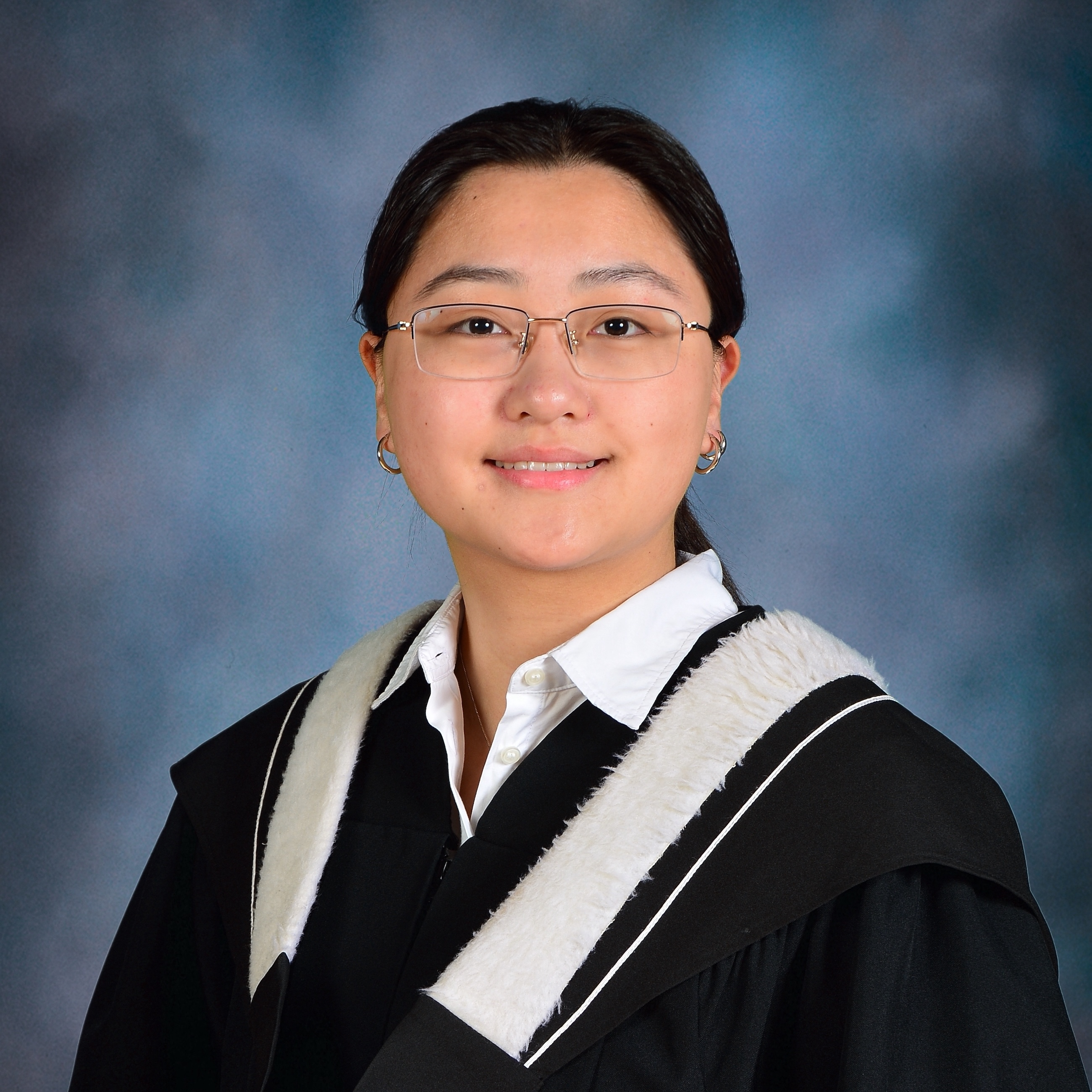
Sophia Mengjia Li

Sophia Mengjia Li

M.Sc Candidate in Computer Science

Master of Science in Applied Computing, Artificial Intelligence in Healthcare (Focus)

University of Toronto

ABOUT ME

I am a Master's candidate in the Department of Computer Science and Faculty of Medicine at the University of Toronto. My focus is in artificial intelligence in Healthcare within the Master of Science in Applied Computing (MScAC) program.

I am fortunate to have interned at several institutions ranking amongst the top five in research centers globally. I have previously researched at the Princess Margaret Cancer Research Centre (PMCRC) of United Health Network (UHN), Lunenfeld-Tanenbaum Research Institute (LTRI) of Mount Sinai Hospital, and Massachusetts General Hospital (MGH) in association with Harvard Medical School (HMS).

I was previously supervised by Dr. Sushant Kumar (Canada Research Chair Tier 2 in Genomic Medicine) at the Computational Cancer Genomics Lab at UHN; Dr. Kieran Campbell (Canada Research Chair Tier 2 in Machine Learning for Translational Biomedicine) at Campbell Lab at LTRI; and Dr. Ruslan I Sadreyev (Director of Bioinformatics) at Sadreyev Lab at HMS.

MY RESEARCH

My research involves the development and application of deep learning and computer vision methods for highly multiplexed biomedical imaging and genome sequencing data. During my undergraduate degree, I have worked in pipeline development, optimization, and deployment for highly specialized applications in computational pathology. Applications have included automated segmentation and quantification, data engineering, feature extraction, and synthetic data generation. I have also worked with various groups working in spatial proteomics, histopathology, and computational biology in cancer biology settings.

More broadly, I am interested in advancing the fields of computer vision and optimizing multi-modal data integration for highly multiplexed biomedical imaging types within the realm of translational research.

Research Interests: Computational Pathology, Pipeline optimization, Computer Vision, Deep Learning

EDUCATION

Master of Science in Applied Computing (MScAC) — University of Toronto September 2026 – December 2027
Department of Computer Science, Faculty of Medicine • Artificial Intelligence in Healthcare (Focus)
Honours Bachelor of Science (HBSc) — University of Toronto September 2022 – December 2026
Department of Computer Science • Bioinformatics & Computational Biology, Computer Science
GPA: 3.9/4.0 • Dean's List Scholar (2022 – 2026) • B. Arthur Bensley Scholarship in Life Sciences (2025)

RESEARCH EXPERIENCE

Computational Pathology Machine Learning Researcher September 2025 – Present
Princess Margaret Cancer Centre, UHN — Computational Cancer Genomics Lab, Dr. Sushant Kumar
  • Designed a multi-modal cascaded diffusion model integrating RNA, CNA, RPPA, and methylation foundation models to synthesize tumour histology from pan-cancer data, achieving 83% match in morphological diversity across cancer types using PyTorch Lightning
  • Led development of a 24.4M-parameter UNet segmentation pipeline and QuPath extensions trained on 10M patches for automated vessel segmentation and fibroblast quantification, achieving 92% Dice score and pathologist-approved CHIP risk-group classification
  • Built and deployed a Python package for TCGA-native DNA methylation data engineering, enabling ML-ready preprocessing at HPC scale 26% faster than current benchmarked research toolkits, with automated reproducibility audits and logging using Python
Spatial Proteomics Research Intern May 2025 – February 2026
Lunenfeld-Tanenbaum Research Institute (LTRI), Mount Sinai — Campbell Lab, Dr. Kieran Campbell
  • Built the first end-to-end spatial proteomics toolkit (ResNet-34 encoder convolutional autoencoder) optimized for highly multiplexed IMC data, reducing runtime by 30% over existing non-optimized toolkits using Python and PyTorch Lightning; cited in paper at Nature
  • Designed novel stratified, morphology-specific virtual ROI sampling protocol benchmarking TMA-IMC against WS-IMC as ground-truth for capturing tumour microenvironment spatial heterogeneity in PDAC using Python and PyTorch Lightning; cited in paper at Nature
Computational Biology Research Intern September 2024 – July 2025
Massachusetts General Hospital (MGH), Harvard Medical School — Sadreyev Lab, Dr. Ruslan I Sadreyev
  • Engineered multi-modal AML sequencing workflows integrating the largest cross-project methylation/RNA-seq cohort to date (TCGA, TARGET, BEATAML1/2), applying fuzzy K-means clustering (K=3 DMGs, K=5 DEGs) for integrative differential subtype analysis using R
  • Identified three novel candidate biomarkers and potential drivers of aggression in the largest AML molecular subtype (NPM1, 30%)

INDUSTRY EXPERIENCE

Full-Stack Software Engineer September 2025 – May 2026
Stealth E-Commerce Platform Startup
  • Designed backend database system for deployed e-commerce marketplace serving over 100k university students, optimizing API fetching with bucket updates resulting in a 65% decrease in page loading times using AWS cloud servers, supabase, and PostgreSQL
Lead Systems Software Engineer May 2024 – September 2026
Victoria University, University of Toronto
  • Led end-to-end architectural and data retention protocol redesign of a university-scale intranet platform serving over 10K users
  • Normalized database schemas resulting in a 17% reduction in storage redundancy using PostgreSQL and MongoDB

TEACHING

Teaching Assistant September 2026 – January 2027
University to Toronto, Department of Computer Science
  • CSC108H1: Introduction to Computer Programming

PROJECTS

Pardon the mess! This section is still under construction!

description
αSMA FibroScore — QuPath extensions for automated αSMA segmentation and quantification June 2026 – Present
Tech Stack: Python, QuPath Automated quantification of αSMA-stained bone marrow biopsy whole-slide images (immunohistochemical stains) for clonal hematopoesis of indeterminate potential (CHIP) research, designed to integrate with QuPath. Given IHC stains, this tool: (1) segments marrow vasculature via a patch-based U-Net; (2) computes patient-level fibroblast and vessel density (αSMA+ area fraction); (3) predicts CHIP status from the derived density score(s); and (4) generates fibroblast and vessel overlays for local and QuPath visualization
WS-IMC Toolkit — Computational analysis toolkit for WS-IMC June 2025 – July 2026
Tech Stack: Python End-to-end preprocessing and computational analysis of whole-slide imaging mass cytometry (WS-IMC) at 5 micron resolution scale. This tool: (1) generates tissue masks; (2) extracts patches, (3) standard preprocessing pipeline, and (4) information saturation and marker distribution analysis.

PUBLICATIONS

Integrated spatial proteomics of human PDAC uncovers an expanded tumour-immune-stroma spectrum with genomic associations
Noor Shakfa, Ferris Nowlan, Sibyl Drissler, ..., Sophia Mengjia Li, ..., Barbara Grünwald (Nature, 2026)
Imaging mass cytometry and whole-genome sequencing were used to map the spatial and molecular heterogeneity of pancreatic ductal adenocarcinoma (PDAC). Integrating spatial, genomic, and clinical features with machine learning improved survival prediction and provided a framework for refined patient stratification.
Preprint: [10.1101/2025.08.15.670565] • Paper: [Under second-round peer review]
Single cell imaging uncovers a coordinated tumor-immune-stroma spectrum with genomic associations in PDAC
Ferris Nowlan, Noor Shakfa, Sibyl Drissler, ..., Sophia Mengjia Li, ..., Hartland Jackson (Cancer Research, 2025)
Imaging mass cytometry and whole-genome sequencing were used to profile spatial and molecular heterogeneity across 221 resected PDAC tumors, revealing distinct tumor cell states, fibroblast phenotypes, and recurrent tumor-microenvironment niches. Integrating spatial, genomic, and clinical features with machine learning identified key cross-omic drivers of survival, offering a refined framework for PDAC patient stratification.
Paper: [10.1158/1538-7445.AM2026-6213]
Validation and algorithmic fairness in AI-enabled ECG models for myocardial ischemia: A systematic review of NA evidence
Imeth Illamperuma, David Agyare-Tabbi, Zarnab Ghumman, Ali Jawaid, Sophia Mengjia Li, Bhavya Gandhi (Journal of Biomedical Informatics, 2026)
This PRISMA review of 29 AI/ML/DL ECG models (2001–2026) for myocardial ischemia detection found strong reporting of discrimination performance but inconsistent leakage safeguards, calibration, and fairness evaluation, with only 2 studies rated high quality—underscoring current limits to clinical translation.
Paper: [Under first-round review]

CURRICULUM VITAE / TRANSCRIPT

View my curriculum vitae and transcript using the following links.