 |
|
| @DCS E-Update Fall 2008 |
|
This e-newsletter is sent out on a regular basis, highlighting some of the latest news and events, and sharing profiles of people and research at DCS.
NEWS
 |
Alan Kay Distinguished Lecturer December 2 |
Distinguished Lecture Series 2008-09
The department is pleased to announce the lineup for this year's Distinguished Lecture Series (DLS). Like last year, the DLS welcomes some of the most exceptional individuals in computer science today; this year's group includes celebrated individuals like Alan Kay, who is considered a pioneering member of the field. For more details and a full listing for the 2008-09 speakers, see the DLS poster here.
Awards
This summer, Prof. Renée Miller was awarded an NSERC Discovery Accelerator Supplement (DAS) for her work on data integration and alignment. The DAS program was created to "maximize the impact of outstanding research programs" across the country, and gave $4 million dollars in support of 100 projects this year. See information on last year's DAS recipients from the department here, and this year's DAS competition results here.
New Faculty Members
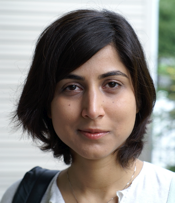 |
Azadeh Farzan |
DCS is pleased to announce the addition of two new faculty members this fall. Azadeh Farzan, most recently a postdoc at Carnegie Mellon, joined the department's Software Engineering group this September; her research interests include a focus on programming languages, software verification, formal methods and security - all with an emphasis on concurrency. Mark Braverman will join us in July 2010, as a part of the Theory group (with a cross-appointment to Mathematics). Mark, a recent Ph.D. grad from DCS, focuses his research interests on complexity theory, the theory of real computation, algorithms and game theory. Mark will spend the next two years as a postdoctoral fellow at Microsoft Research New England, in Cambridge. These two exceptional individuals are welcome complements to the department.
EVENTS & PROGRAMS
Student Recruitment Season Begins
Remind prospective students that the department will soon be accepting applications for our graduate and undergraduate programs. This year's graduate program application deadline is December 8, 2008. More information can be found here. Information about undergraduate application deadlines will be made available in late October; find out more about our program here.
DCS Mentorship Program
In its fourth year, the Alumni Mentorship program continues to inspire upper-year undergraduate students by matching them up with alumni. The program runs from December to the end of May, during which time students and alumni make a few contacts, and students ask questions about careers, the workplace and other topics such as maintaining the work-life balance. For more information, see our mentorship site here. Information about signing up for the program will be available in mid-October.
PROFILE
 |
Research:
Online Music Recommendation and the
Problem of Missing Ratings
In a recommender system, users provide ratings for items like movies or songs, and the systems computes personalized recommendations for each user... for this profile and others, click here.